

Info Point
B
O
R
G
O
D
I
C
E
S
I
Loading

- info@cesiportadellumbria.it
- Cesi, 05100 Terni (TR), Umbria, Italia
A journey along the Via Flaminia among parish churches, castles, and catacombs: Roman and medieval history along the trails of the Martani Mountains
The construction of the Via Flaminia in the 3rd century BC marked the Roman conquest of Umbria. Near Narni, the road split into two branches: the western route ran along the entire Martani mountain range, rejoining the eastern branch at Bevagna.
This itinerary allows you to walk a short stretch of that western branch, passing parish churches, castles, and catacombs—a journey through time, easy and best enjoyed at a relaxed pace.
The route starts at Santa Maria in Pantano, a Romanesque church with a Benedictine monastery built on the remains of a Roman structure in the area of Vicus Martis. From here, turn right toward the castle of Montignano, built before the year 1000 and linked to the history of the Arnolfi family, and then continue to the remarkable Abbey of San Faustino. Returning to the route of the Via Flaminia, you reach the Catacomb of San Faustino, containing Christian burials dating back to the 4th century. The catacomb consists of a straight corridor extending into the hillside, from which four galleries branch off (visits and opening times: +39 075 8951735 – 075 895171).
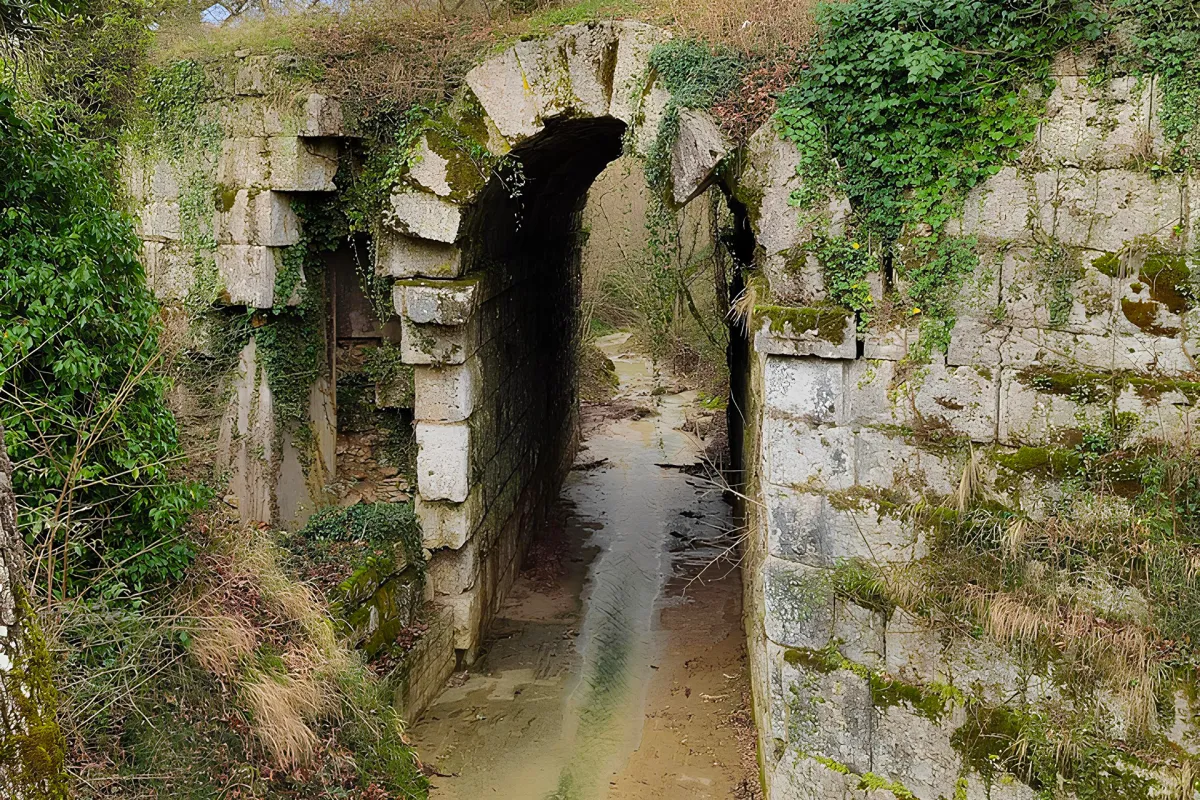
A little further along the Via Flaminia stands the Roman-era Ponte Fonnaia, a fine example of the solidity and practicality of Roman engineering. The return follows the same route back to the SR 416 and then continues along the unpaved track known as the Old Flaminia.
How to get there
The starting point of this itinerary is near Massa Martana, directly opposite the Church of Santa Maria in Pantano. It can be easily reached by car from the SS 3 Bis (E45), exiting at Massa Martana from either the north or the south. From the exit, head toward the village and you will find the church with its façade on the right side of the road. Parking is available in front of the church or a short distance further on near a bar. From here, the village of Massa Martana can also be reached by car in about five minutes for a visit.