Info Point
B
O
R
G
O
D
I
C
E
S
I
Loading

- info@cesiportadellumbria.it
- Cesi, 05100 Terni (TR), Umbria, Italia
Valserra is an enchanting place, where the Serra stream flows gently between the Martani Mountains and Mount Acetella
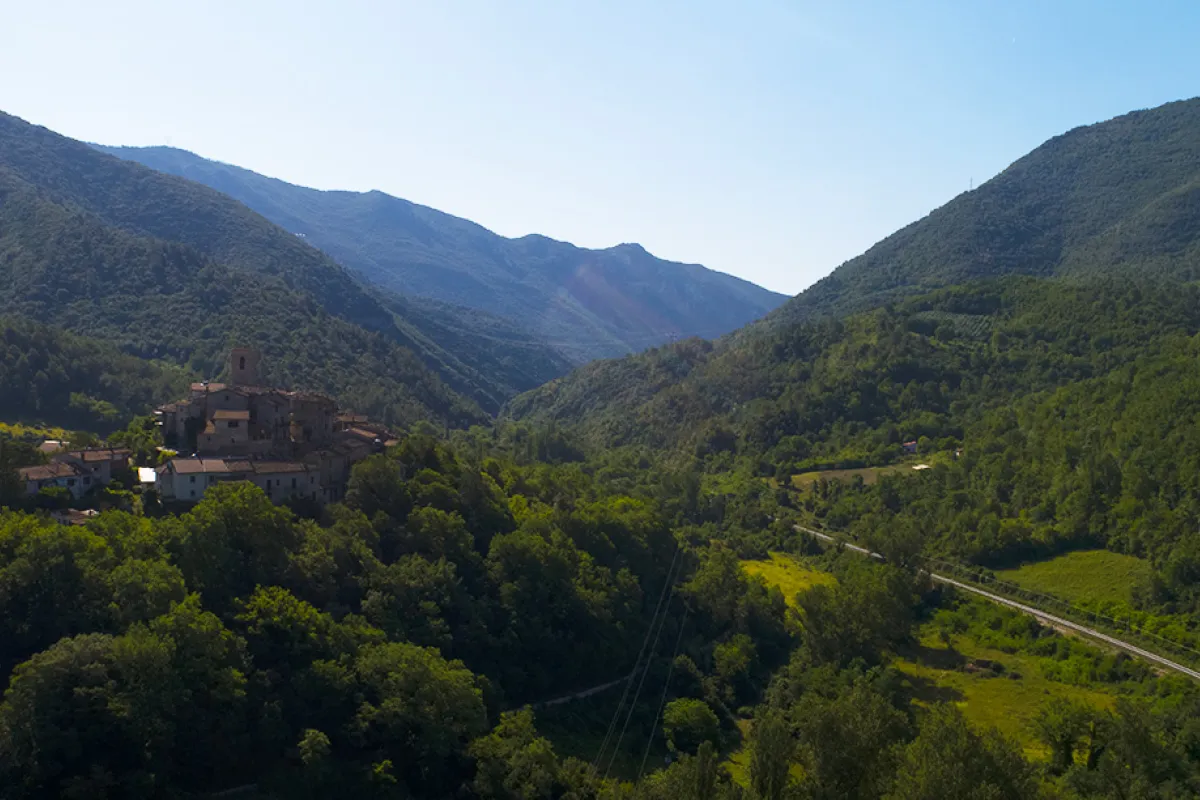
Here, on the mountain slopes, small villages have developed that represent a true treasure of the area, considered a natural bridge between the Terni basin and Spoleto.
Rocca San Zenone is the ideal starting point for exploring this territory, with its characteristic towers that still seem to preserve the ancient history of the place.
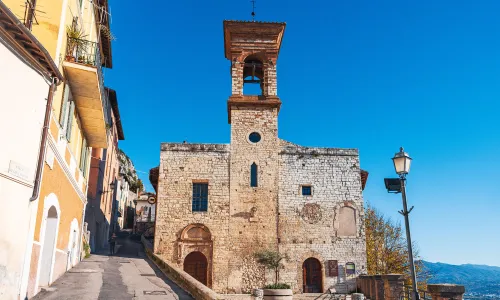
Among the villages encountered along the route, one can admire Acquapalombo with the Church of San Lorenzo and the distinctive stone slab arch at the entrance of the noble Sala family residence; Appecano, a settlement dating back to Roman times, conceived as a “villa,” with the Church of San Martino; Collegiacone, with the small Church of San Michele Arcangelo and, behind it, the ruins of Sant’Angelo di Rivosecco in a state of abandonment.
Poggio Lavarino, on the other hand, was probably founded in the medieval era by Benedictine monks, with the Church of San Bernardino. Not far from the village are the ruins of the old watermill, abandoned, and near the cemetery is the Church of San Pietro, with its beautiful frescoes, also abandoned and under municipal ownership.
Polenaco is mentioned as “Villa Ippollinaci,” with the Church of Sant’Apollinare, while Porzano is an ancient Roman-age castle, with the Church of San Fortunato.
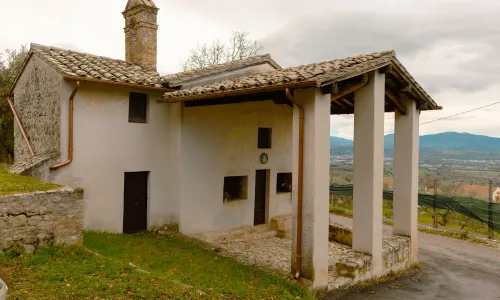
Finally, Giuncano is a small village distinguished by its tiny stone church, set amidst greenery, dedicated to the Madonna.